
Penalty Controversy Arises After Premier League Panel Review of Liverpool vs. Arsenal
The Premier League’s Key Match Incidents Panel has concluded that Liverpool should have been awarded a penalty in their recent defeat against Arsenal at Anfield. According to a report from BBC Football, the panel found that referee Andy Madley’s on-field decision was incorrect.
Advertisement
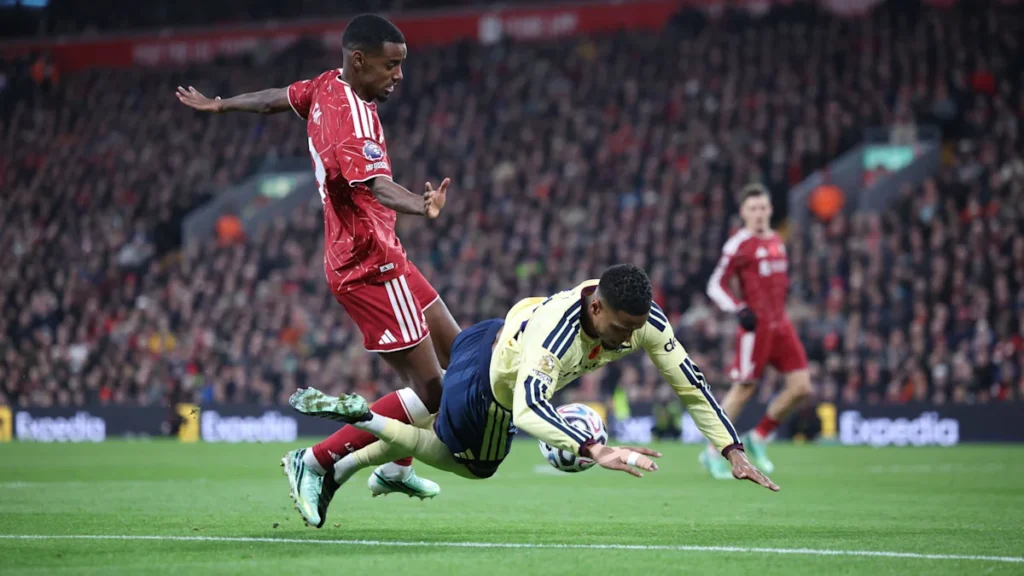
The incident in question involved Alexander Isak during the 21st minute when a cross from Bradley Barcola led to Jurrien Timber pulling Isak’s shirt as he attempted to play the ball. Despite the infraction, Madley allowed the game to continue, and VAR official Stuart Attwell did not call for a review. At that point, Arsenal had already taken a 1-0 lead with a goal from Kai Havertz, which ultimately decided the match.
The panel voted 4-1 in favor of the penalty being warranted. Additionally, it split 3-2 regarding VAR intervention, determining that the oversight on the penalty constituted a “clear and obvious error” on the part of the video officials. On the issue of whether Timber’s tackle should have resulted in a red card, the panel had a unanimous opinion that it did not qualify as denying an obvious goalscoring opportunity.
This decision highlights the common uncertainties surrounding contact, its consequences, and players’ reactions. Isak remained on his feet after the challenge and attempted to continue the play, which may have influenced the initial no-call—despite the independent review stating that the foul had impacted his scoring chance.
Post-Match Reactions from Managers
After the match, Andoni Iraola addressed the situation during his comments to BBC Match of the Day: “There is a clear grab of the shirt.” He added,
“Alex was just in front of him. He was going to head in front of the goal, but couldn’t because he grabbed the shirt. If he goes to the floor, they call the penalty, 100%. It should be like this, but it is what it is. Next time, the managers should tell Alex to go to the floor, otherwise they won’t call it. The answer is you have to dive. If you don’t dive they won’t call it.”
IMAGO
Advertisement
The same panel also found an error in VAR decisions during the 2-2 draw between Ipswich Town and Hull City, identifying that Ipswich should have been awarded a penalty when Nobel Mendy held Dara O’Shea during a corner. However, the Isak incident carries significant implications for Liverpool, especially since it occurred in a close loss against a key competitor, further exposing the inconsistency of how shirt-pulling offenses are officiated throughout the league.
Analysis of the Verdict
This ruling does not alter the current standings but reinforces what many viewers noticed immediately after the replay. Isak was indeed impeded, the chance he had was compromised, and Liverpool was denied a crucial penalty in a match decided by a single goal. This situation expresses frustration, as the acknowledgment of the error comes too late to change the outcome.
Perhaps the most frustrating aspect is how often players who maintain their footing seem to be penalized. Isak’s decision to stay upright and contest for the ball, ideally, should bolster his case. However, the reality suggests the opposite may be true. Iraola’s comments reflect a keen awareness of this trend. Players are quickly learning what actions lead to favorable outcomes, which raises concerns about the message being sent regarding officiating standards in the league.
Advertisement
While Liverpool had opportunities to respond, the focus shifts to the integrity of officiating in high-stakes matches. Moments in crucial games can dictate outcomes, and the role of officials should be to minimize errors rather than perpetuate them. When both the referee and VAR fail to act on a clear shirt pull that significantly influences a scoring opportunity, trust in the refereeing process diminishes.
This situation also highlights the growing importance of players like Isak, who continues to pose challenges for defenders and initiates such critical incidents. Moving forward, Liverpool will expect to see further significant moments from him and hope that when another clear foul occurs against him, it will be recognized in real-time rather than being addressed after the fact by a review panel.