
Headline: Cristiano Ronaldo’s International Career Comes to an End
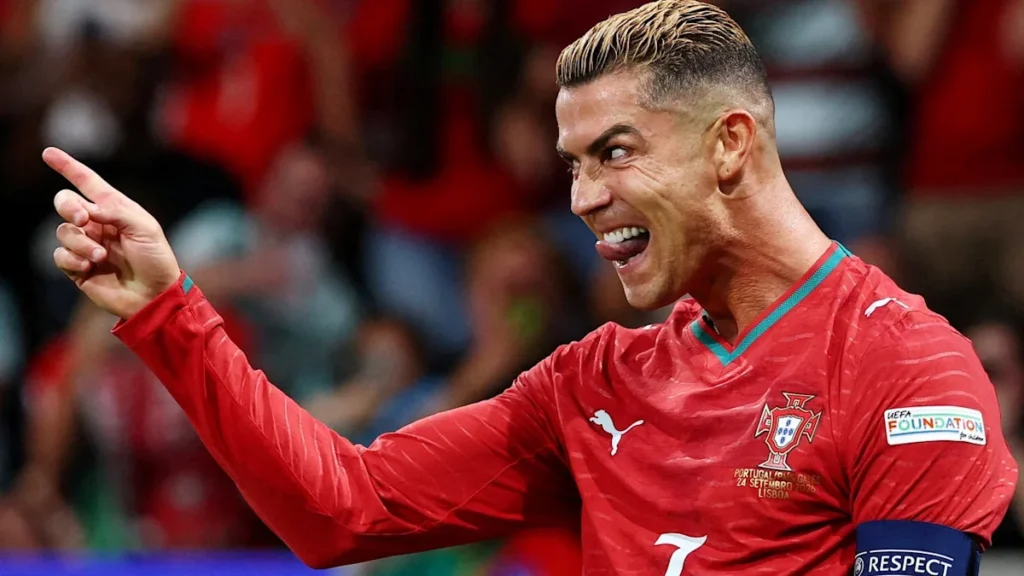
Cristiano Ronaldo’s retirement from international football marks the conclusion of a lengthy chapter that began in December 2022 during the World Cup in Qatar. Portugal secured a decisive 6-1 victory over Switzerland thanks to a hat-trick from Goncalo Ramos. Yet, Ronaldo, who took nearly four years to acknowledge the decline of his contributions, stepped away from the national team just three months shy of his 42nd birthday.
Ronaldo’s decision comes after over 23 years playing for Portugal, notably extending beyond what many considered the appropriate time in terms of competitive performances. His departure came not with the celebratory fanfare that many expected, but rather as a recognition that his presence had begun to hinder Portugal’s chances at upcoming tournaments, such as Euro 2024 and the 2026 World Cup.
In a rather undignified finish, Ronaldo left Portugal’s training camp last month following a match against Norway where he remained an unused substitute. He expressed his discontent with manager Jorge Jesus, asserting that it was inappropriate to treat him like a player of lofty status such as Pelé or Maradona, only to leave him warming the bench. This self-reflective sentiment was articulated in a lengthy 2,000-word post on Instagram, resulting in a 30-day suspension from the Portuguese Football Federation—a penalty that has drawn criticism for its minimal impact on a player of his stature.
Throughout his international career, Ronaldo accumulated a remarkable record of 234 caps and 146 goals, making him the highest scorer in international football—a record unlikely to be surpassed soon. Despite his outstanding statistics, some nuances of his performance have prompted discussions about the quality of his contributions over the years. While he remains Portugal’s top scorer in World Cup history, many felt his performance in crucial knockout matches did not live up to expectations.
Ronaldo has been characterized by his longevity and adaptability for the national squad. He garnered a remarkable history, including scoring in six World Cups and commanding the record of 30 appearances alongside netting 14 goals in European Championships. He holds the distinction of leading Portugal to its only major trophy victory while captaining the national team.
However, Ronaldo’s later years revealed a different narrative, often marked by moments of individualism and candidly self-centered play. His tenure culminated in numerous matches across major tournaments, where he struggled to impact the game meaningfully.
Even as he bore the weight of high expectations, Ronaldo’s collaboration with coaches like Roberto Martínez turned contentious, often overshadowing the potential contributions of other talented Portuguese players. The team seemed to falter, particularly because of Ronaldo’s diminishing form, which raised questions about the feasibility of his long tenure.
As Ronaldo bids farewell to his international career, numerous tributes are likely to pour in, recognizing both his astounding feats and complex legacy. For his manager and teammates, the end of Ronaldo’s Portugal chapter may bring a sense of relief following years of navigating the challenges brought about by his prolonged presence in the team.