
Headline: Manchester City’s Stadium Expansion Raises Questions About Taxpayer Benefits
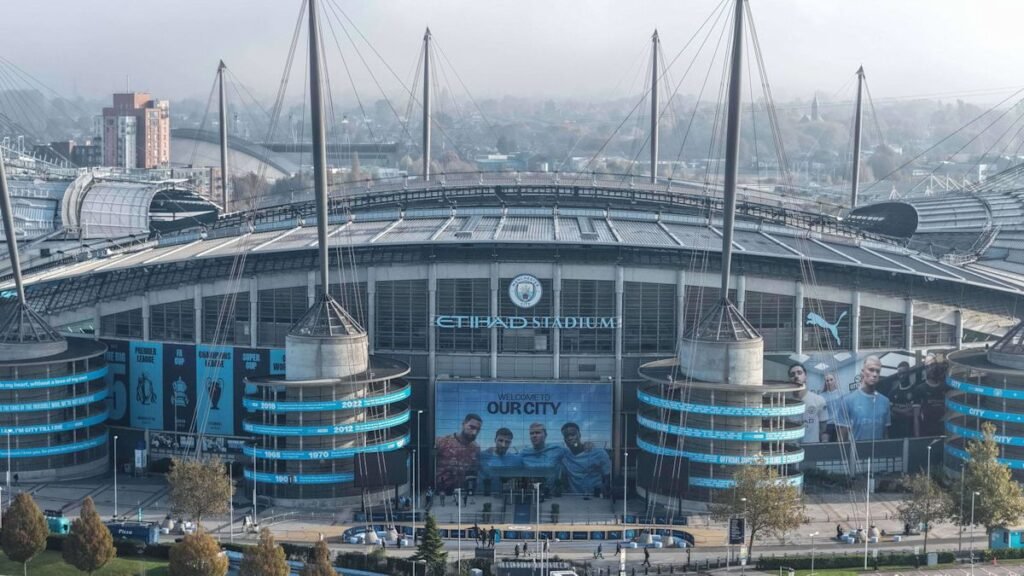
Following the £300 million redevelopment, which has increased the Etihad Stadium’s capacity to over 60,000 and introduced a year-round entertainment district featuring a Radisson Blu hotel, discussions have emerged regarding how this investment impacts taxpayers.
The Premier League club now offers fans an all-weather venue with diverse food and drink options while a new three-storey megastore and museum is expected to open to the public by mid-December.
Manchester City Council has owned the stadium and leased it to the club since 2003. With the expanded facilities significantly boosting income, especially on matchdays, attention has shifted to the minimal effect this will have on the council’s revenue.
A recent investigation by The i Paper revealed that Manchester City’s basic annual rent will increase by just £33,000, plus an inflation-linked adjustment. This represents less than a one percent rise from the £4.4 million currently paid annually, even as analysts predict the improved North Stand and matchday amenities could yield Manchester City an additional £11 million each year.
Opposition figures have taken the chance to question the clarity and value of the renegotiated lease, arguing that while Manchester City stands to gain substantially from the extra capacity and increased ticket sales, the council’s benefits remain largely unchanged.
Critics assert that councillors were neither consulted nor provided adequate opportunities to examine the confidential negotiations, despite separate agreements made for the City Square fanzone and surrounding hotels and restaurants.
The council has defended the agreement, claiming that the updated lease promises a solid return based on independent professional assessments. Officials emphasize that the deal builds upon the initial investment from the 2002 Commonwealth Games and generates annual income, which is designated for community sports and recreational activities across Manchester, in collaboration with Sport England.
Despite this, the timing of the new lease has reignited discussions about commercial partnerships and public land deals associated with the club.
As Manchester City faces ongoing legal challenges involving the Premier League and struggles on the pitch, the tension between business interests and public governance is likely to receive continued examination from competitors and political figures.
Currently, coach Enzo Maresca and his players are observing a two-week hiatus from domestic club activities, as more than 15 of the first-team squad have broken away for commitments with their respective national teams across various competitions.