
Headline: Mauricio Pochettino Poised to Depart U.S. Soccer for Manchester United Role
FAYETTEVILLE, Ga. — Three months after agreeing to a contract to coach the U.S. team through the 2030 World Cup, Mauricio Pochettino appears set to leave for Manchester United.
All signs indicate that the 54-year-old Argentine will take over from Michael Carrick, whose poor start to the Premier League season has urged the English club to seek a new direction.
Advertisement
Pochettino’s farewell from the U.S. program is expected to occur during the CONCACAF Nations League quarterfinals against Haiti, scheduled for Saturday in Miami and Tuesday in Cincinnati.
U.S. supporters, though disappointed, may have seen this coming. The prospect of Pochettino completing his contract was always somewhat unlikely.
Essentially, Pochettino is a club coach by nature. Although he cherished his opportunity with the national team, particularly during the 2026 World Cup, his inclination toward club football seemed to draw him back across the Atlantic.
He started his head coaching career in 2009 at Espanyol in Barcelona, where he still owns a home, before moving to England to lead Southampton, Tottenham Hotspur, and Chelsea. Even after taking the U.S. position two years ago, he continued living abroad and commuting as necessary.
Advertisement
This week marked the arrival of Manchester United, the most prestigious club in England, which has expressed interest in Pochettino for coaching roles several times over the past decade.
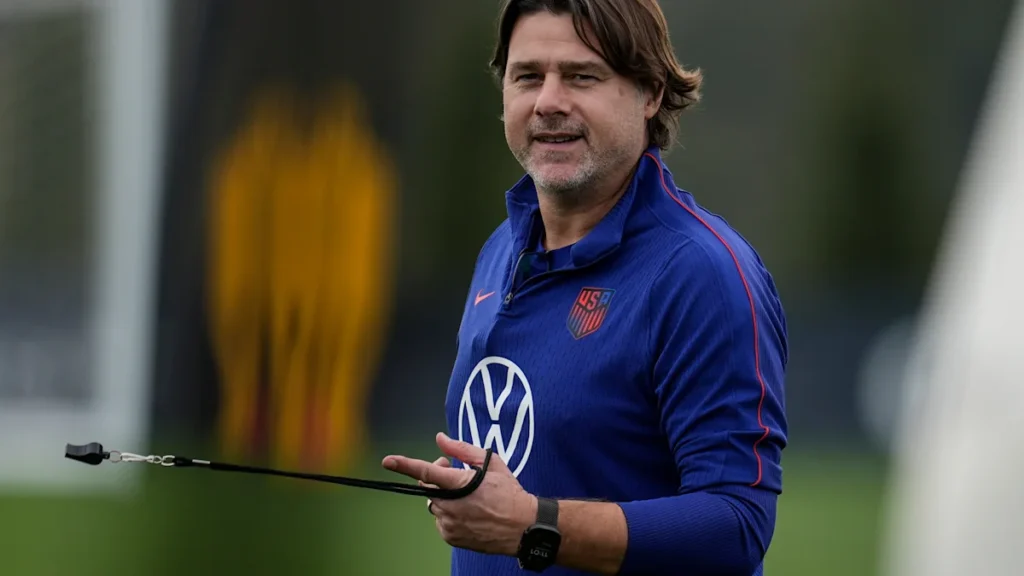
USMNT coach Mauricio Pochettino may have signed on through 2030, but his pull toward club soccer was never going away.
(AP Photo/Mike Stewart)
Despite United’s ongoing challenges on and off the field, the club remains one of the most prestigious positions in sports globally. Declining an offer from United would be comparable to a baseball manager turning down the Yankees.
Had it not been United this time, Pochettino would likely have attracted interest from another high-profile club as the lead-up to the 2030 World Cup continues.
In the last 18 months, World Cup preparations have not shielded him from inquiries from Tottenham and AC Milan, among others. Given his history with Tottenham, where he spent 5 ½ years and reached the Champions League final in 2019, the Spurs may emerge as a future option.
Advertisement
Pochettino also had a stint in France with Paris Saint-Germain during the 2021-22 season, coaching a star-studded trio of Lionel Messi, Kylian Mbappé, and Neymar.
Transitioning to the U.S. program two years ago marked a significant departure from club football for him. He did not inherit a World Cup favorite like Argentina or Spain; instead, he needed to revitalize a U.S. team that had stumbled during the 2024 Copa America, leading to Gregg Berhalter’s termination.
It introduced a different cadence and methodology. As a club coach, he typically operated without breaks throughout the fall, winter, and spring, engaging actively in the transfer market.
By contrast, coaching a national team means limited time with players and an inability to seek new talent actively. What he has is largely what he can work with.
Advertisement
Nonetheless, the U.S. made a strategic choice by hiring a high-profile, successful coach at a cost of about $6 million annually, making him the highest-paid coach in U.S. soccer history. The hefty contract required support from outside contributors.
Eventually, the team began to respond to Pochettino’s strategies after a rocky start. Last fall, in a series of friendlies, the players started to click, culminating in a solid World Cup performance, where they gained support like never before.
The Round-of-32 victory against Bosnia and Herzegovina was followed by a tough defeat to Belgium, keeping the U.S. from achieving its quarterfinal objective.
Before the World Cup, discussions had emerged between Pochettino and the U.S. Soccer Federation regarding a potential extension, as he envisioned having a full four years to prepare the team for the highest level of competition.
Advertisement
As he focused on the 2030 World Cup, he utilized his first post-World Cup camp to introduce around a dozen young players to the senior national team. With a blend of experience and youth, the Americans successfully swept four friendlies in September and October, leading into the upcoming CONCACAF Nations League quarterfinals against Haiti.
Amid these preparations, the narrative outside the camp shifted due to the Manchester United situation.
Since Pochettino is still under contract, the U.S. Soccer Federation would receive a reported $10 million if he departs for United. If he had left following the World Cup when his initial contract lapsed, the federation would have gained nothing.
While Pochettino’s resignation may disrupt U.S. Soccer’s immediate plans, the timing is not catastrophic. Following a minor camp that will involve MLS players in December, the U.S. men’s team does not have matches until the end of March for either the Nations League final four or a set of friendlies.
Advertisement
The U.S. officials are eager to secure a permanent coach as soon as feasible, ideally before the CONCACAF Gold Cup next summer. Qualifying for the 2030 World Cup will not commence until next fall at the earliest.
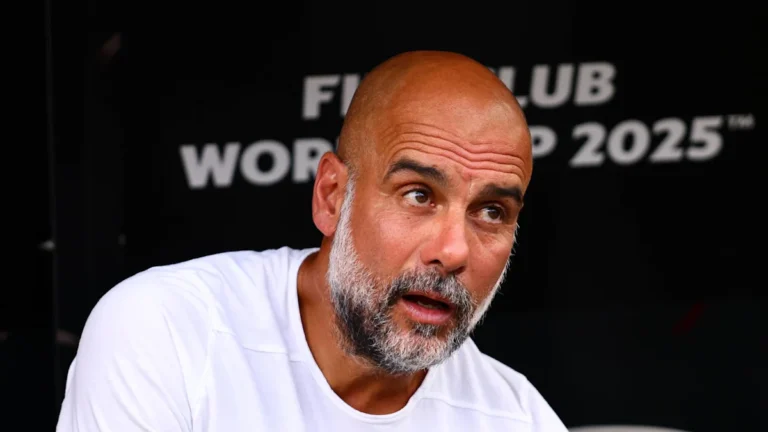
Potential candidates for the coaching position could include U.S. under-23 coach Steve Cherundolo, former U.S. assistant B.J. Callaghan, Roberto Martinez, previously with Belgium and Portugal, or even Pep Guardiola, known for his success with Barcelona, Bayern Munich, and Manchester City.
Advertisement
Like Pochettino, Guardiola would also come from a club coaching background, having won numerous titles, including three Champions League trophies. However, it’s uncertain whether Guardiola might also choose to return to club management later on during the World Cup cycle. U.S. officials might find comfort in the fact that Pochettino’s anticipated departure is happening now, as it was clear he would eventually move on.